


Back to School: Nutrition, Balance, and Play – A Parent's Guide

The yearly scramble to get routines back on track is about to begin. Kids face new friendship pressures, teacher transitions, and excitement can also become paired with worry. Beyond the school supply list there are three important things to keep in mind when kids handle the transition from summer to school: what’s fueling their bodies, how their free time is structured (or isn’t), and how much time they spend moving outside. Here’s what helps:

Nutrition, Especially When Lunch Does Not Go As Planned
Not every kid eats their lunch or enjoys school lunch. Nutrition ties directly into energy and mood. Many children go home hungrier than anticipated due to short lunch periods, social diversions, anxiety over a new classroom, or simply not enjoying what's in the box that day. Hungry, underfueled children find it difficult to concentrate, control their emotions, and make it through the after-school hours.
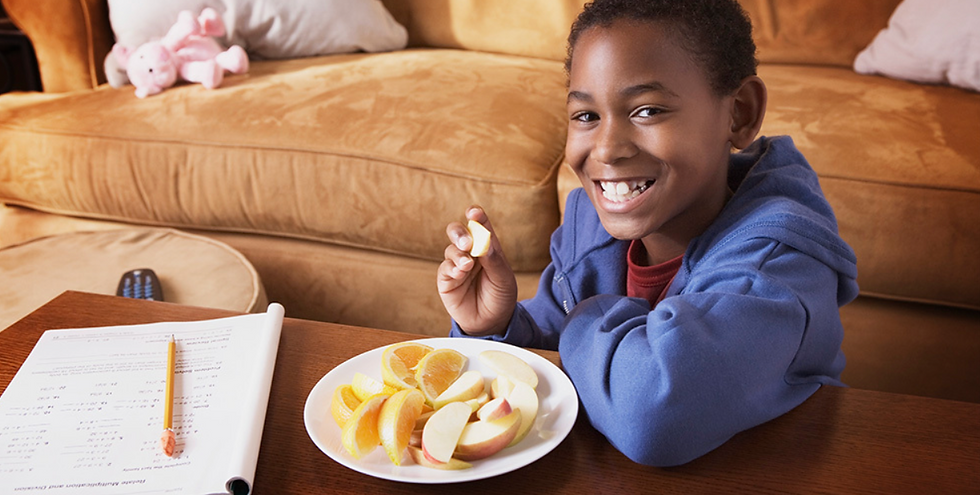
Here are a few ways to plan around this struggle:
Treat lunch as a maybe, not just a guarantee. If your kid regularly skips or under-eats lunch, plan an earlier after school snack, instead of just waiting for dinner. 6+ hours without real food is a long time for a growing child.
Pack food they’ll actually eat, if that is an option. A beautifully balanced lunch that comes home uneaten isn't doing any good. It is sometimes okay to prioritize what gets eaten over what looks like the ideal lunch on paper. This can be especially important and comforting early in the year when kids are adjusting to new food or new schedules.
Help make the after school snack real food. Something with protein and fiber, such as fruit with peanut butter, cheese and crackers, or yogurt, will hold kids over better than chips or a granola bar alone. It can also help make sure they don't crash before homework time.
If it's a pattern, reach out to the teacher. Some classrooms have flexible snack times and it's worthwhile to ask rather than to assume nothing may change.
After-School Activities: Best in Moderation
Extracurriculars are super valuable and let kids express themselves outside of school hours. Sports, music, clubs, and groups can all build confidence, team-working skills, and social connection. But sometimes, overscheduling can lead to burnout, irritability, and kids who never get a break to just be or play.
It is important to ask yourself if your child has unstructured time most days of the week, or is every afternoon accounted for? If “every afternoon” is the answer, it may be beneficial to see if you can trim back some activities or space them out more.
Unstructured play does something that structured activities cannot. Free play alone, with siblings, and friends helps kids work out social dynamics, test negotiation, conflict resolution, and make sense of the world. An hour of pretend play or a backyard game is not wasted time. Instead, it is how children grow up cognitively and emotionally. If every hour of the day is programmed by a guardian, this space does not exist.
A reasonable approach for most families can include one or two activities per season that your kid is really excited about, downtime in the afternoons, and the chance to say no to an activity that adds dread instead of enjoyment.
Movement and Outdoor Time
After long days of sitting and listening in a classroom, children need to move. The best type of movement happens outside, not just a different indoor space.
This can be broken down into two ideas
Kids need to burn energy. Movement is a way to reset children’s bodies and minds. Sitting still and focusing all day is hard work for a young and developing brain. Physical activity after school helps kids regulate their moods, improve quality of sleep, and gives exploration and outlets that are not a screen or a quiet indoor activity.
Daylight exposure matters for sleep regulation. Natural light helps regulate the body's internal clock and produces melatonin. This is especially true of afternoon light and can affect how kids fall asleep at night. The brain receives different signals from interior lighting, even bright indoor lighting. One of the easiest and most often disregarded strategies for improved nighttime rituals is to spend some time outside each day.
After school, even 30 to 45 minutes of outside activities, such as riding a bike, playing in a park, kicking a ball, or even taking the dog for a walk, can significantly enhance mood and sleep quality.

Putting It Together
None of these three things need to be perfect. The goal isn't a flawless lunchbox, a packed schedule of enrichment, or hours of outdoor time every single day. It's important to build a rhythm that gives kids what they actually need. This is reliable fuel, room to breathe and play, and a regular dose of movement and daylight. Get those three things roughly right, and the rest of the school year tends to go a lot more smoothly.
If you’re ready to take the next step, our therapists at Georgia Family Therapy — Dr. Aurélie Weinstein, Candace Johnson, and Courtney Watson — are available in the Sandy Springs and the Atlanta area to help you navigate whatever this season is bringing up. Reach out today to schedule a free consultation at www.georgiafamilytherapy.com or by phone at 678-888-1717.
Sources
Florence, M. D., Asbridge, M., & Veugelers, P. J. (2008). Diet quality and academic performance. Journal of School Health, and related work summarized in Associations between Food Group Intake, Cognition, and Academic Achievement in Elementary Schoolchildren, Nutrients — ncbi.nlm.nih.gov/pmc/articles/PMC6893423
Alaimo, K., Olson, C. M., & Frongillo, E. A. (2001). Food Insufficiency and American School-Aged Children's Cognitive, Academic, and Psychosocial Development. Pediatrics, 108(1), 44–53.
Ginsburg, K. R., and the AAP Committee on Communications and Committee on Psychosocial Aspects of Child and Family Health (2007). The Importance of Play in Promoting Healthy Child Development and Maintaining Strong Parent-Child Bonds. Pediatrics, 119(1), 182–191 — publications.aap.org
American Psychological Association (2023). The many wondrous benefits of unstructured play — apa.org/topics/children/kids-unstructured-play-benefits
Dodd, H. F., et al. A Systematic Review of Research into the Impact of Loose Parts Play on Children's Cognitive, Social and Emotional Development — ncbi.nlm.nih.gov/pmc/articles/PMC5680404
Zayatz, C., Hopko, O., Gambino, K., Paluch, R., Anzman-Frasca, S., & Ferrante, M. J. (2025). Relationships between outdoor physical activity, health-related quality of life, and sleep in 8-to-12-year-old children. Frontiers in Sports and Active Living, 7, Article 1516699 — doi.org/10.3389/fspor.2025.1516699
Vanderloo, L. M., et al. Outdoor physical activity, compliance with physical activity/screen time/sleep recommendations, and excess weight among adolescents — ncbi.nlm.nih.gov/pmc/articles/PMC7156827
Akacem, L. D., Wright, K. P., & LeBourgeois, M. K. (2018). Sensitivity of the circadian system to evening bright light in preschool-age children. Physiological Reports — ncbi.nlm.nih.gov/pmc/articles/PMC5835497
Lee, S. I., et al. (2018). Melatonin suppression and sleepiness in children exposed to blue-enriched white LED lighting at night. Physiological Reports — ncbi.nlm.nih.gov/pmc/articles/PMC6295443
Comments